








Bhubaneswar,swa news : The recent busting of an illegal hash oil unit in Malkangiri, South West Odisha, reveals a simple truth. When people do not have stable jobs, some may turn to illegal work to survive.
Many studies show a strong link between youth unemployment and the growth of illegal activities. This is especially true in remote and poor regions. When there are no steady incomes, criminal networks find it easier to operate.Police action can stop illegal work for a while. But if people still do not have secure jobs, the problem can return.
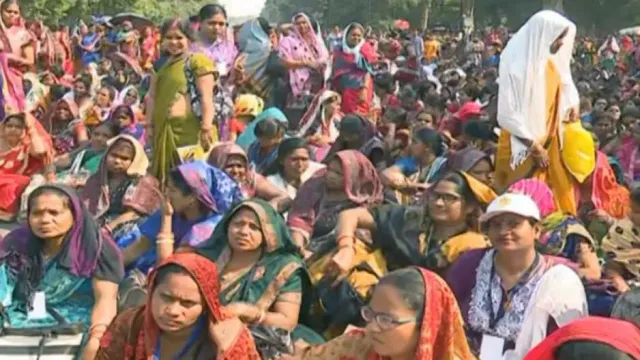
Western Odisha is among the poorest regions of the state. Most people here depend on seasonal, agriculture-based work, and migration has become a necessity rather than a choice. This is largely because the region has very limited industrial activity. Even where industries exist, they are mostly in the metals sector but lack assured access to raw material inputs. As a result, these industries operate below capacity and fail to generate sustained local employment.
A much neglected yet durable answer lies in Odisha’s vast mineral wealth – particularly its untapped bauxite reserves, which presents a long-term structural solution to livelihoods. By tapping into these mineral reserves, the state can provide stable, year-round financial income to thousands of families, creating a “Livelihood Shield” that protects vulnerable youth from being lured into illegal trades or forced into distress migration. Responsible mining and its downstream industries possess the unique potential to transform resource-rich districts like Kalahandi, and Rayagada from hubs of economic neglect into centers of dignified, formal employment, ensuring that no citizen has to choose between crime and survival.
While the recent police crackdown reflects strong enforcement—seizing cannabis oil worth nearly ₹25 lakh and noting seizures exceeding ₹7.5 crore in just four months—the development has triggered wider concerns about the socioeconomic conditions that allow such networks to take root.
“There is no regular work here. People have families to feed and children to educate. When income is uncertain, some get pulled into wrong activities. No one commits crime by choice, often it is compulsion,” said a villager from the affected region. Another resident added, “Work is available, but not throughout the year, and it does not pay enough to sustain a household. We only want dignified employment. If stable jobs are created locally, crime will automatically decline.”
Another resident added, “Work is available, but not throughout the year, and it does not pay enough to sustain a household. We only want dignified employment. If stable jobs are created locally, crime will automatically decline.”
Officials and analysts observe that illegal economies tend to expand in areas where formal livelihood opportunities are limited, youth unemployment is high and seasonal work fails to provide income security. In such environments, criminal networks exploit economic vulnerability.
Notably, Malkangiri and several districts of Western Odisha, including Kalahandi and Rayagada, are among India’s resource-rich regions with substantial deposits of bauxite – the primary raw material for aluminium used in sectors such as aviation, electric mobility and infrastructure. Industry experts note that responsible mining, downstream manufacturing and value addition have the potential to generate steady, well-paying employment across the region.
Odisha’s mineral wealth offers a structural opportunity to build local economic resilience. Converting that natural advantage into dignified livelihoods could reduce distress-driven choices and close the space that illegal economies currently occupy.
The Malkangiri case, therefore, is not only a law-and-order story, it is a reminder that economic vacuum often breeds criminal alternatives.For a safer and more prosperous Odisha, policy attention must move beyond reactive enforcement toward proactive livelihood generation.








+ There are no comments
Add yours