



For decades, the global energy narrative has been written in the language of vulnerability. As geopolitical fault lines deepen—from maritime chokepoints to sudden supply shocks in West Asia—import-dependent nations find themselves dangerously exposed to externaldisruptions. In context of India, the country currently imports roughly 89% of its crude oil and continues to drain billions in foreign exchange reserves annually on essential energy and chemical feedstocks. In an era defined by global supply fragmentation,achieving true domestic energy security is no longer just an ambitious industrial policy; it has become a vital national safeguard.
The core strategy to address this vulnerability centers on a profound structural shift: moving from “extraction for combustion” to “extraction for creation.” By deploying advanced surface coal gasification, India is positioned to transform raw, high-emissionthermal coal into clean synthesis gas (syngas). This process establishes a critical foundation for downstream high-value manufacturing, capable of replacing up to ₹3 lakh crore in volatile annual imports of crude oil liquefied natural gas (LNG), methanol,ammonia, and essential chemical feedstocks. While this vision is national in scope, its execution will perform or perish based on the industrial and logistical capacity of one pivotal state: Odisha.
The Odisha Equation: Balancing COP26 Commitments with a Coal-Driven Economy
At first glance, scaling up coal utilization in Odisha—India’s mineral heartland—appears to contradict the country’s climate commitments. As one of the largest coal-producing states and a hub for energy-intensive industries, Odisha sits at the centre of thisdilemma. Under the Panchamrit framework at COP26, India has committed to reducing projected carbon emissions by one billion tonnes by 2030 and achieving Net-Zero by 2070. Aligning these goals with a coal-driven industrial base is the real, on-ground test ofIndia’s energy transition.
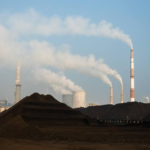
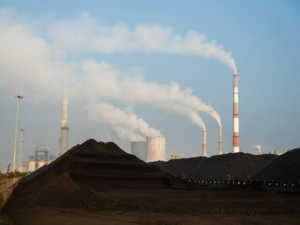
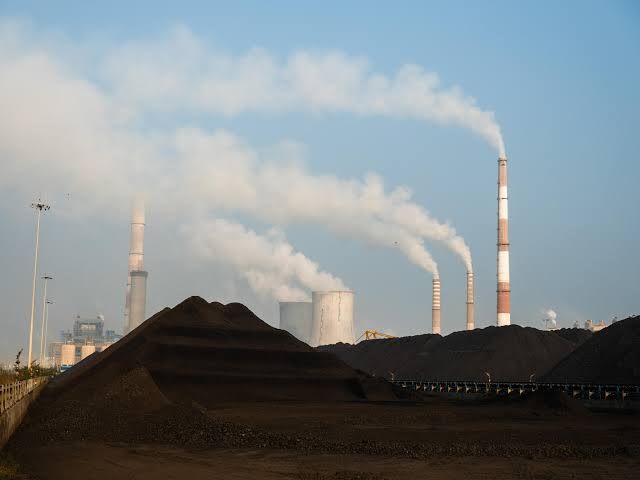
This is where surface coal gasification emerges as a pragmatic bridge. Unlike traditional combustion, which generates high levels of pollutants and fly ash, gasification transforms coal into a cleaner industrial feedstock for downstream use.By processing coalin a controlled, high-temperature environment, gasification converts it into basic chemical components, enabling early removal of impurities. It also produces a concentrated CO₂ stream suitable for Carbon, Capture ,Utilization and Storage (CCUS) applications,including urea production.
For Odisha, this shift is transformative moving from a raw coal supplier to a hub for value-added manufacturing. In doing so, coal gasification aligns climate commitments with industrial growth, reduces import dependence, and creates a more sustainable developmentpathway.
The Indispensable Anchor: Odisha’s Geopolitical and Structural Advantages
A national mandate of this scale requires a flawless alignment of natural resources, infrastructure, and logistical corridors. Under the national blueprints of Atmanirbhar Bharat and Viksit Bharat, the central government has set a definitive target to gasify100 million tonnes of coal by 2030. To kickstart this capital-intensive eco-system and insulate investment from long gestation risks, Central government has established an aggressive promotion scheme featuring a ₹37,500 crore financial support framework, buildingan expansive fiscal buffer worth approximately ₹46,000 crore.
Coal ministry has rightly noted, these incentives are structured not to pad state revenues, but to protect national interests and the country’s economic future. Odisha has emerged as the first state to proactively step forward with a comprehensive action plan,securing its position as the logistical epicenter of this national energy transition through two distinct structural advantages:
- Massive Geological Endowments:
Odisha holds over 24.6% of India’s total coal reserves, concentrated primarily in the hyper-productive Talcher and Ib Valley coalfields. While the bedrock of this supply remains managed by public sector giant Mahanadi Coalfields Limited (MCL), the recent liberalizationof the mining sector has fundamentally expanded this geological landscape. The continuous operationalization of commercial coal block auctions has integrated aggressive public and private sector developers. This commercial evolution guarantees that multi-billion-dollardownstream gasification facilities can draw from a diversified, highly competitive, and secure long-term feedstock pool over their 25-to-30-year lifespans.


+ There are no comments
Add yours