













By Kulamani Biswal
Odisha today finds itself in the midst of a loud and, at times, misleading debate on power sector reforms. A sudden rise in the number of self-proclaimed “power experts” who have no technical expertise are driving an incorrect narrative about power reforms. At the centre of the controversy is the rollout of smart meters—an essential reform that has already transformed electricity distribution in several Indian States. While public debate is healthy, the narrative being pushed in some quarters risks obscuring facts and delaying a reform that Odisha can ill afford to postpone.
Smart metering is not an experiment, nor is it a novelty. It is a globally accepted tool to ensure accurate billing, reduce power theft, improve service quality, and restore the financial health of electricity distribution utilities.
Technology Cannot Be Selectively Distrusted
One of the most common arguments against smart meters is that consumption data is stored on remote servers and could therefore be manipulated. This concern, while frequently repeated, is inconsistent with how modern life actually functions.
Every day, consumers rely on digital systems for mobile billing, banking transactions, airline ticketing, and stock trading. In all these cases, data is processed remotely, protected by standards, encryption, and audit trails. Electricity metering is no different.
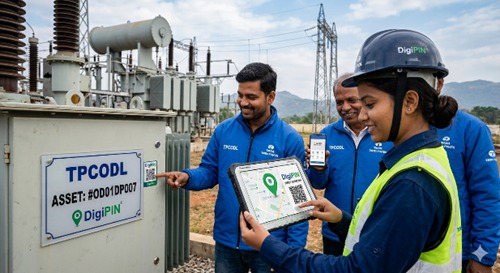
A smart meter is essentially a static electricity meter equipped with a communication module. It records consumption at the consumer premises and transmits the data securely. There is nothing exotic or untested about the technology.
Built-in Safeguards, Not Blind Trust
Smart meters installed in Odisha or rest part of India are governed by IS 16444, the Bureau of Indian Standards specification, and operate within the framework other IS codes. These meters record data in a non-editable format. Once logged, consumption readings cannot be altered.
Utilities may remotely connect or disconnect supply for operational reasons, but they cannot manipulate recorded data. The systems are encrypted, auditable, and subject to regulatory scrutiny. Allegations of arbitrary data tampering are unsupported by technical or regulatory evidence.
It is important to distinguish between genuine consumer concerns and unfounded apprehensions that undermine confidence in reform.
Smart meter specifications and its operability is prescribed by the India’s top power experts at the Central Electricity Authority (CEA). For a lay man understanding it works like a black box.
Regulation, Not Arbitrary Action
Another misconception is that smart meters are being installed selectively to target certain consumers. In reality, the rollout is not decided by distribution companies at their discretion.
The implementation roadmap is determined under the oversight of the Odisha Electricity Regulatory Commission (OERC) who acted upon getting directions in this regards from CEA and Ministry of Power, Government of India. Distribution companies act as implementing agencies, bound by regulatory approvals, service standards, and grievance redressal mechanisms.
This separation between regulator and utility is a cornerstone of electricity sector governance in India.
Learning from Bihar and Assam
The experience of other States offers a useful perspective.
Bihar—long considered a laggard in infrastructure—now leads in power reform with over 8.2 million smart meters installed by November 2025. Improved billing efficiency and loss reduction have contributed to record revenue of Rs.17114 crores for FY 24-25, a 13% rise, enabling greater financial stability and lower tariffs for rural consumers.
Assam has deployed over 3.5 million smart meters, focusing on theft control, grid visibility, and service reliability rather than prolonged debates over settled technology.
These States have chosen to modernise their grids instead of remaining locked in legacy systems.
The question for Odisha is straightforward: Should the State move forward with evidence-based reform, or allow hesitation to slow its progress while others advance?
What Is at Stake
Electricity distribution is the weakest link in India’s power sector. Persistent losses ultimately burden honest consumers, constrain investment, and limit service quality. Accurate measurement is the foundation of fairness—for consumers, utilities, and the State.
Smart meters enable transparent billing, faster grievance resolution, time-of-day tariffs, and better demand management. Over time, they reduce cross-subsidisation caused by theft and inefficiency.
Opposing smart meters without offering a viable alternative risks perpetuating a system where inefficiencies remain hidden and accountability is diluted.
Choosing Progress Over Perpetual Doubt
Consumer interests are best protected not by resisting technology, but by ensuring it is implemented transparently, regulated firmly, and communicated clearly. Regulatory institutions exist precisely to ensure that technological adoption does not compromise fairness.
Odisha has a proud history of pioneering power sector reforms. Retreating from modernisation now would not serve consumers, the economy, or the State’s development ambitions.
Smart meters are not a threat. They are an instrument of transparency.
The real choice before Odisha is not between technology and people—it is between stagnation and progress.
About the Author
Kulamani Biswal is a senior energy professional with over four decades of experience in power sector finance and regulation. He has served as Director (Finance) at NTPC; Director (Finance) and Chief (Finance) at the Central Electricity Regulatory Commission (CERC); and Joint Secretary and Joint Director (Finance) at the Odisha Electricity Regulatory Commission (OERC). He currently works as an Advocate and Consultant in energy regulation and finance.







+ There are no comments
Add yours